There are royal evenings that shimmer quietly in the background of history — elegant, predictable, beautifully rehearsed. And then there are nights that erupt into legend. Nights that stop the whispers in Buckingham Palace corridors… nights that rewrite the emotional map of a family… nights that make millions of Americans lean in, press play, and feel a lump in their throat they never expected.
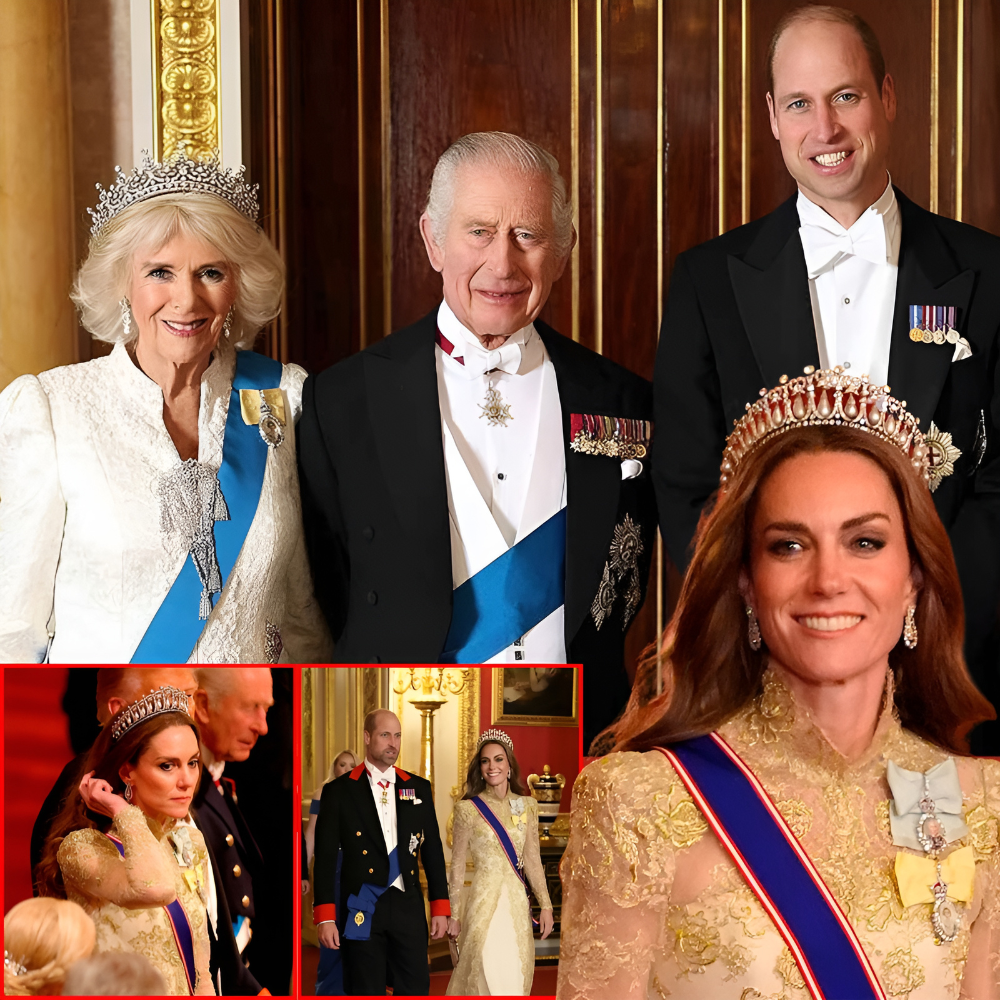
The US State Banquet at Windsor Castle was meant to be a diplomatic showcase — a polished dance between nations, framed by chandeliers, gold leaf, and ceremonial trumpets. But what unfolded instead became something entirely different.
It became a story about a daughter, a father, a future king, and a monarchy searching for its own beating heart.
And at the center of it all — Princess Catherine.
.jpg/250px-Princess_of_Wales_at_State_Banquet_2025-09-17_(0.75_crop).jpg)
I. THE NIGHT BEGAN LIKE ANY OTHER — UNTIL IT DIDN’T

Windsor Castle glowed like a jeweler’s display case that evening. The American delegation arrived in sleek black cars, their reflections dancing on the polished cobblestones. Inside, the 72-piece orchestra tuned their strings; footmen in scarlet livery took their places; chefs performed final checks on the most scrutinized meal ever served.
Then Catherine walked in.
Not as the world’s favorite duchess.
Not merely as the Princess of Wales.
But as a woman who has survived storms, shouldered expectations, and learned how to glow even in the darkest corridors of royal life.
Her gown — silver-white silk that caught the candlelight like frost — drew gasps. Americans whispered her name. British guests stood a little taller. Cameras clicked as if trying to preserve the moment in crystal.
But no one — absolutely no one — knew what was coming.
II. THE KING’S UNEXPECTED STILLNESS
King Charles has always been a man of ritual. Even his smallest gestures tend to echo decades of royal training. But as he stood at the long, glittering banquet table, something was different.
Not tense.
Not solemn.
Just… contemplative.
He looked down the line of royals beside him — Camilla first, then the Duke of Gloucester, then Queen Anne-Marie of Greece — until his eyes landed on Catherine.
Witnesses swear that his expression changed.
Not dramatically. Not theatrically.
But like a father recognizing something in a daughter he hadn’t fully seen before.
A softness.
A pride.
A moment that felt almost private — except the entire world was watching.
Prince William, standing across from him, caught the shift too. His brow lifted, then eased. A small smile — the kind spouses exchange in quiet reassurance — flashed toward Catherine.
None of them knew that within minutes, everything would change.
III. THE SPEECH THAT STARTED AS DIPLOMACY… THEN TURNED PERSONAL
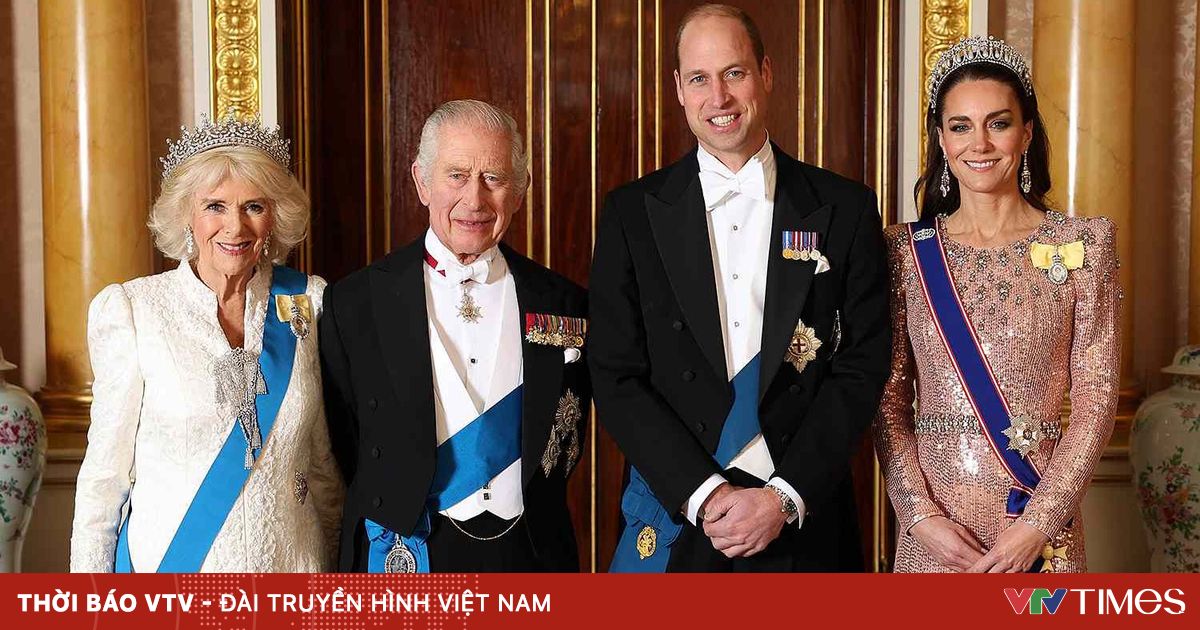
King Charles tapped the glass gently, calling the hall to attention. The orchestra lowered their bows. The gowns stilled. The cameras pointed forward.
He began with tradition — praise for US-UK relations, memories of his past visits to Washington, warm words for the First Lady.
But then the tone shifted.
Something moved in his voice. Warmer. Deeper. Not the rehearsed cadence of monarchy… but the unmistakable timbre of a man who has weathered storms and chosen gratitude over regret.
And then — the moment.
Charles turned slightly.
Toward Catherine.
All breath in the hall seemed to disappear.
“Tonight,” he said, “I wish to recognize someone whose grace, strength, and unwavering dedication to duty represent the very best of our kingdom.”
Camilla’s hands froze on her knife.
William lifted his chin.
Catherine blinked once, steady but surprised.
Charles continued.
“Her compassion has touched our people. Her resilience has strengthened our family. And her service, carried out with humility and extraordinary dignity, has earned my deepest respect.”
A murmur rippled through the hall — soft, uncertain, shocked.
Americans in the room, unfamiliar with royal protocol, felt something electric but didn’t yet understand what it meant.
Britons, however, recognized the language.
This wasn’t a compliment.
This wasn’t a formality.
This was the overture to something historic.
IV. “I BESTOW UPON HER…” — AND THE ROOM STOPPED EXISTING
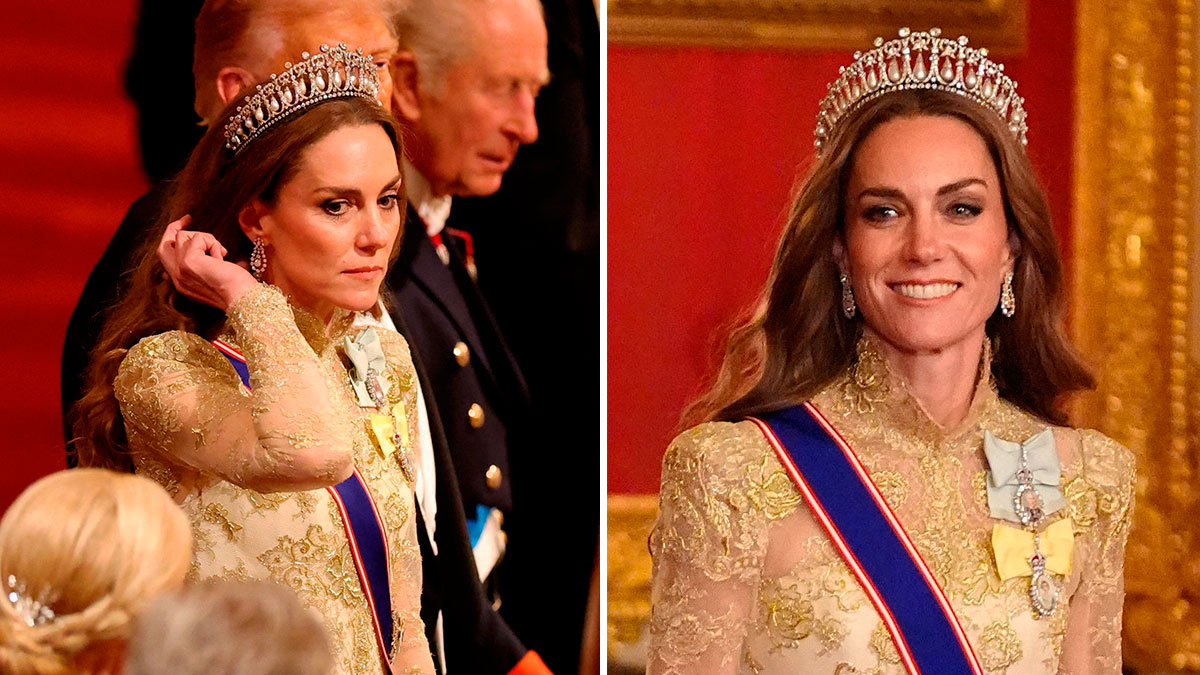
Then came the sentence that will be replayed for generations:
“And so, it is my honor to bestow upon Catherine a title rarely given, one last granted more than a century ago…”
Forks clinked.
A gasp escaped someone near the orchestra.
A member of the American delegation whispered, “Oh my God, he’s doing this publicly?”
Charles continued:
“I name her Royal Lady of the Sovereign’s Order of Honor, in recognition of service not just to the Crown, but to the moral soul of this nation.”
Not just service.
The moral soul.
The meaning hit everyone at once.
This wasn’t a royal award.
This wasn’t decorative.
This was Charles elevating Catherine as the emotional backbone of the monarchy.
A symbolic daughter.
A trusted heir’s partner.
A future queen he believed the country would one day lean on.
William’s lips parted in shock.
He didn’t smile — not at first. He simply stared at his father, as if trying to absorb the magnitude.
Catherine looked overwhelmed. Her eyes softened, shimmering, but she stayed composed, shoulders straight, hands gently clasped.
Even Camilla — whose public history with Catherine has always been… complicated — froze in stunned silence.
V. AMERICA FALLS SILENT — AND THEN RISES IN APPLAUSE
The Americans in the room didn’t know the history, the rarity, the internal politics.
But they understood emotion.
A father honoring a daughter.
A king choosing unity.
A family healing in real time.
The applause began hesitantly — one delegate, then another — until the entire American table stood.
Then the British followed. Slowly at first… then thunderously.
Catherine rose awkwardly, humbled, hand on her heart. William touched her back gently — a quiet, instinctive gesture of love.
Charles watched them both.
And there, just for a second, the King’s eyes glistened.
It wasn’t about power.
Or titles.
Or ceremonial duties.
It was about legacy — the emotional kind.
The legacy of knowing the monarchy will survive not because of jewels or castles… but because of the people who carry its heart.
VI. WHAT THIS MOMENT REALLY MEANT — A FATHER’S GESTURE
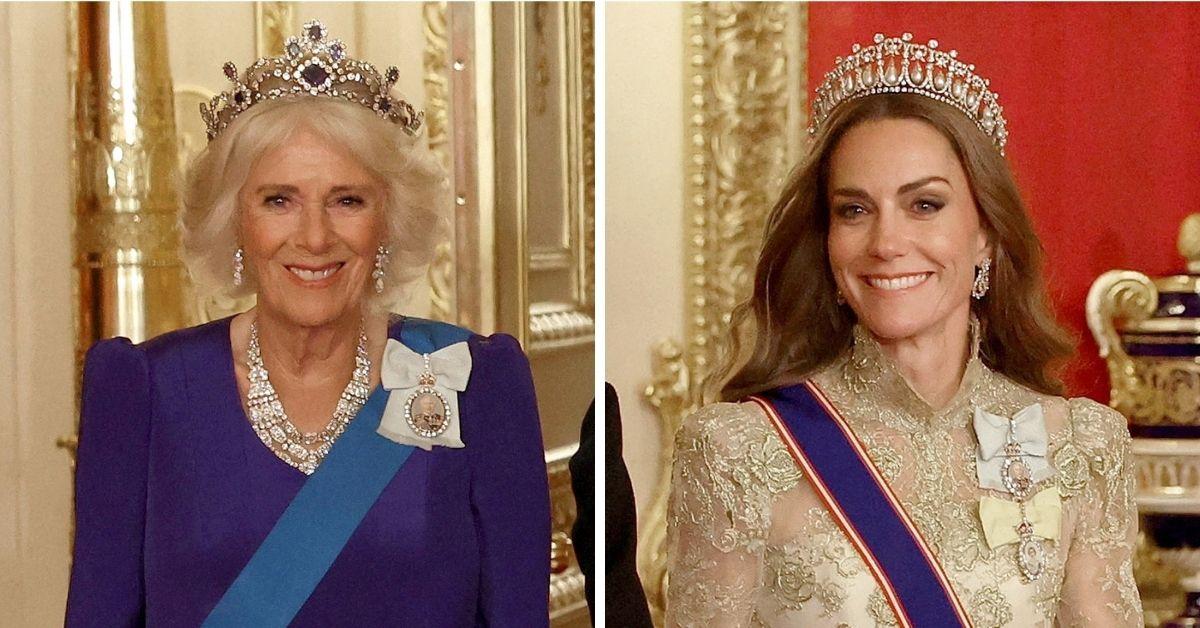
To Americans, the monarchy often feels like an institution of diamonds and silk, far removed from everyday life.
But in that moment, King Charles felt profoundly human.
This was not strategic.
This was not political.
This was not a PR move.
This was personal.
For years, Catherine has stood beside William through illness, pressure, scrutiny, and the weight of preparing for a throne she can already feel looming. She has raised her children under the harshest spotlight in the world. She has stayed steady when others faltered.
Charles saw all of it.
And on that night, he chose to say so publicly.
Perhaps he knows his time as King is not endless.
Perhaps he wanted to cement something while he still could.
Perhaps he wanted the world — especially America — to understand exactly who he trusts to carry the monarchy forward.
And perhaps… he wanted Catherine to feel, finally and unquestionably, part of his heart.
VII. WILLIAM’S REACTION: PRIDE, RELIEF… AND SOMETHING ELSE
Later, a senior Windsor insider said privately:
“The look on William’s face said it all. He knew his father had given Catherine more than a title. He had given her belonging.”
William has always been protective of Catherine — fiercely so. He understands her pressures more than anyone. He knows how hard she works, how much she sacrifices, how deeply she cares about the causes she champions.
But on this night, he wasn’t her protector.
He was the man standing astonished as the King of England acknowledged the woman he loves as the emotional bedrock of his future reign.
Reporters noticed something rare: William wiping the corner of his eye. Subtle, quick, but real.
This wasn’t just history.
This was family healing in real time.
VIII. CATHERINE’S PRIVATE EMOTION: A WOMAN WHO NEVER ASKED FOR THIS
Photographers caught Catherine smiling — warm, graceful, holding herself with practiced poise.
But a royal aide later revealed:
“She was overwhelmed. She never expected it. She never asked for it. She felt… seen.”
And that’s the heart of this story.
Catherine has never chased the spotlight.
Never demanded recognition.
Never fought for status.
Her influence isn’t loud.
It isn’t sharp.
It isn’t political.
It’s emotional.
Quiet.
Steady.
The kind that holds families together.
And Charles chose to honor that — out loud, before the world.
IX. THE PALACE SHOCKWAVES — AND WHY AMERICA LOVED IT

Behind palace walls, the move sparked chaos.
Some courtiers whispered that Charles had gone “off-script.”
Some wondered how Camilla felt.
Some questioned the political timing.
But outside the palace — especially in the United States — the reaction was overwhelmingly emotional.
Americans adore Catherine.
They admire her humility, her elegance, her story.
And they understand the symbolism of a patriarch embracing a daughter-in-law publicly.
It felt real.
Human.
Almost cinematic.
It was the kind of moment that transcends monarchy entirely — the kind of moment that would resonate in any family, anywhere.
A father honoring the woman his son loves.
A king acknowledging the future queen.
A family choosing grace.
X. THE FINAL MOMENTS OF THE NIGHT — A MEMORY ETCHED IN GOLD

After the applause, after the speeches, after the cameras stopped flashing, something small but deeply moving happened.
Guests were walking toward the reception area when King Charles quietly stepped toward Catherine.
He didn’t bow.
He didn’t formalize the gesture.
He simply touched her hand — a light, fatherly squeeze — and said:
“Thank you… for everything.”
Catherine’s eyes softened. She whispered something back — witnesses couldn’t hear it, but they saw the way Charles smiled.
William stood behind her, watching, a hand resting protectively at her back.
And for the first time in a long time, the three of them looked like a simple family — not a monarchy, not an institution, but a father, a son, and the woman who holds them both together.
XI. WHAT THE NIGHT MEANS FOR THE FUTURE
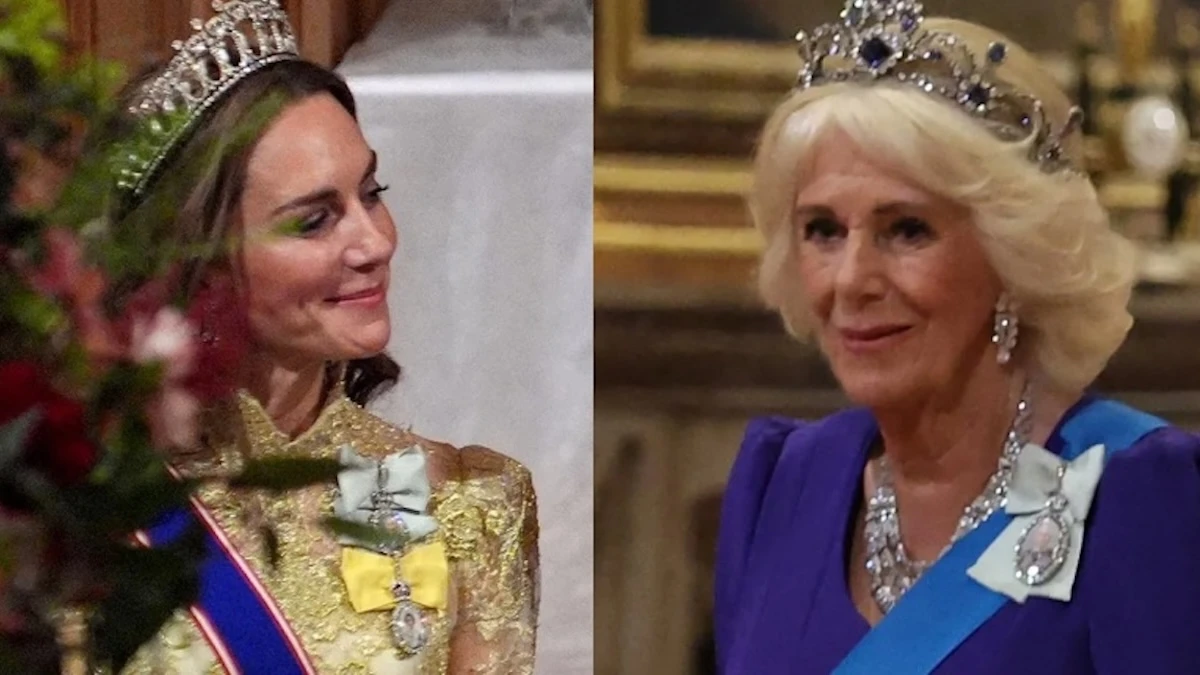
Royal historians will analyze this moment for years.
Some will focus on the rare honor.
Some will focus on the politics.
Some will focus on the effect on Camilla’s position.
But Americans — the audience this moment unexpectedly moved the most — understand something deeper:
This is a story about love.
About the courage to say what should be said before it’s too late.
About choosing unity over distance.
Warmth over coldness.
Gratitude over silence.
And perhaps… about a father trying to repair, in public, the mistakes of generations before him.
Because for the first time in decades, the monarchy didn’t feel remote or rigid.
It felt human.
And Catherine — the girl who married into a storm and grew into a leader — stood at its very center, shining.
THE NIGHT THE CROWN CHOSE ITS HEART

History will remember the US State Banquet at Windsor Castle for its diplomacy, its elegance, its global significance.
But millions of Americans will remember it for something far simpler:
The night a king looked at his daughter-in-law…
saw the heart she carried…
and chose to honor it.
A moment of recognition.
A moment of healing.
A moment of legacy.
A moment that made the world — just for a heartbeat — believe in something beautiful.
