When the world remembers Queen Elizabeth II, they remember steadiness. A lifetime of duty. A monarch who remained unshakable through wars, scandals, political storms, and generational shifts that would have fractured any other institution. She embodied discipline, silence, and—above all—control.
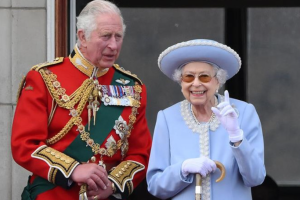
Which is why the discovery of her private letters has sent shockwaves through Buckingham Palace.
Because hidden within those pages is a vulnerability no one imagined the Queen possessed: fear.
Not fear of politics.
Not fear of crisis.
Not even fear of mortality.
But fear for the future of the Crown—particularly the future resting in the hands of her grandson,
Prince William.
The letters do not simply critique. They mourn. They question. They warn.
And one sealed message, written months before her death and addressed directly to William, has become the most whispered-about document in modern royal history.
This is the emotional story behind the Queen’s secret fear, the letters she never intended for the world to see, and why those closest to the Crown believe her final words could change everything.
A Discovery That Was Never Meant to Be Public
The letters were not found in a grand vault. They were not tucked behind a portrait or protected in a royal safe. They were discovered in a modest, leather-bound file inside Windsor Castle—quietly labeled, simply, “Private Reflections.”
An archivist reviewing documents for a historical catalog paused when he opened the folder. These were not the Queen’s routine notes or state briefings. These were personal writings, detailed reflections, and fragments of thought she had chosen not to share during her life.
Most surprising were the pages written about William.
Some were dated years ago.
Some were recent.
Some appeared to be written during moments of deep contemplation.
But one thing united them all:
A tone of concern.
Not disappointment.
Not anger.
But worry—the kind that only appears when someone you love carries the weight of a crown they do not yet fully understand.
“He Has the Rigor of a Leader, But…”
In one note, written in her distinctly careful handwriting, the Queen reflected on William’s growing global popularity. “He shines,” she wrote. “In ways even his mother would be proud of.” But then her words took an unexpected turn.
“He has the rigor of a leader, but too rigid to feel the hearts of his subjects.”
Rigid.
A word the Queen rarely used.
Those who understood her best knew that when she used a word sparingly, she meant it with precision.
Rigid did not mean cruel.
Rigid did not mean cold.
Rigid meant danger.
A risk to the delicate balance a modern monarch must strike.
She continued:
“I fear the throne may one day resemble a stage, and William a star more than a sovereign.”
These were not the judgments of a critic.
They were the worries of a grandmother—one who had watched the monarchy shape, pressure, and sometimes break those who carried it.
The Queen’s Internal Conflict: Love vs. Duty
What makes these notes so emotionally charged is the tension pulsing beneath the ink.
Because behind her observations lay a deeper struggle: the Queen loved William. Fiercely. She admired his strength, his conviction, and his moral clarity.
But she also knew what he did not yet fully understand.
The Crown does not reward charisma alone.
The Crown does not survive on applause.
Popularity is a tide: it rises, it crashes, it recedes without warning.
And a celebrity monarch—beloved today, questioned tomorrow—posed risks she had spent 70 years avoiding.
She wrote:
“The monarchy endures when it is steady, not shining. When it listens, not dazzles.”
For a woman who built an entire era on disciplined consistency, the idea of a future king adored for glamour but tested in governance was unsettling.
Some advisors, reading these notes now, say they represent the most revealing portrait of the Queen’s emotional life ever recorded. She feared not for herself—not even for the institution—but for William’s heart, his identity, and the pressure he would one day face.
Why William’s Popularity Troubled Her
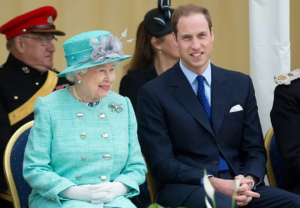
To the public, William’s rising star seems like the monarchy’s greatest asset. He is poised, articulate, and admired both in the UK and abroad. Crowds cheer louder for him than for any senior royal except perhaps Catherine. Media coverage of him often leans heroic, framing him as the stabilizing force of the modern royal era.
But the Queen understood something deeper:
Popularity is seductive.
And seduction breeds distraction.
Those who knew her say she often reminded family members:
“The Crown is service, not spotlight.”
But in the age of social media, global press cycles, and viral narratives, even William has not been immune to becoming a symbol rather than a sovereign.
Her notes reflect this tension:
“William loves his people, but risks loving their attention too.”
It wasn’t a scolding.
It was a grandmother seeing her grandson face a world she never had to navigate—and wondering if he grasped the dangers hidden beneath admiration.
The Most Disturbing Line in the Letters
Though many passages caught the attention of royal insiders, one line stood out as the most haunting:
“I fear he may inherit the throne before he is ready… or before he understands what readiness truly is.”
This was not a woman accustomed to fear. She lived through world wars, terrorist threats, constitutional crises, and prime ministers who tested her patience.
But this fear was different.
It was maternal.
It was prophetic.
And it was directed at the very heart of the monarchy’s future.
The Queen’s Final Private Letter — And the Sealed Envelope
Among the notes was one envelope addressed simply:
“For William.
To be opened only upon his accession.”
Written months before her death, the letter was sealed in wax—her personal seal, not an official one.
When King Charles III ascended the throne, the letter was archived temporarily. But once William became the official heir, it was quietly delivered to him.
No one knows what it contains.
Not the archivist.
Not the courtiers.
Not even the King.
But one advisor—one of the only people who saw the letter after it was opened—shared a single chilling comment:
“If he truly understands what she wrote… everything will change.”
Everything.
The monarchy.
William’s leadership.
His approach to responsibility.
Perhaps even his relationship with the public—or with Catherine.
What words could carry such weight?
What truth did she believe only he must know?
Royal insiders describe William as shaken but composed after reading it. Some say he spent hours alone afterward. Others say he requested solitude in Windsor Park the next morning.
Whatever the Queen told him, it pierced something deep.
Did the Queen Predict the Future?
Several historians now argue that the late Queen foresaw the pressures William would inherit: not just the throne, but a fragmented era where monarchy must compete with entertainment, activism, digital media, and public disillusionment.
A celebrity monarch might win headlines…
but lose credibility.
Win applause…
but lose authority.
The Queen had always protected the monarchy’s mystique by staying slightly out of reach. Not cold, but not casual. Not glamorous, but dignified. Always present, but never performative.
William’s strength—his relatability—was also, in her eyes, his vulnerability.
She wrote:
“He will be loved. But I pray he will also be understood.”
There is a difference.
She feared the public might adore the man but misunderstand the Crown, or worse—expect him to be something no monarch can sustainably be: a star.
Catherine: The Unspoken Counterbalance
Though the letters focus primarily on William, several passages hint at another figure the Queen quietly admired: Princess Catherine.
She noted Catherine’s steadiness, her quiet intelligence, and her instinctive understanding of when to shine and when to step back. Some insiders believe the Queen saw Catherine as the emotional anchor William desperately needed.
In one note, she wrote:
“Catherine tempers him. She hears what he cannot yet hear.”
She saw in Catherine not just elegance, but equilibrium—a quality the Queen herself had relied on for decades.
Which raises an even deeper question:
Did the sealed letter contain advice about not just kingship…
but partnership?
Why the Palace Is Terrified of These Leaks
There is no scandal in the letters.
No insult.
No betrayal.
The Palace’s fear stems from something else entirely:
Humanity.
The Queen who ruled with an iron calm had private doubts.
She questioned, reflected, and even mourned the future.
Such vulnerability threatens the carefully cultivated image of seamless continuity. To admit the Queen feared anything—especially for the monarchy’s future—chips away at the invincible façade Buckingham Palace depends on.
But the truth is far more moving:
Her worries were born out of love.
And love, in her world, was rarely expressed openly.
What Happens Now?
William will never publicly acknowledge the contents of the letter. It will not be published. It will not be quoted. It may never be fully understood by anyone except him.
But some changes are already being quietly observed:
A shift in his tone during speeches.
A new seriousness during state engagements.
A deeper awareness of the weight he carries.
Some insiders whisper that the Queen’s final instruction was simple but profound—something that forced William to reexamine not only his future but the monarchy’s direction.
Others believe the letter contained a warning:
about the dangers of fame,
the temptation of public approval,
or the erosion of sacred boundaries.
And a few believe it included a plea:
to protect the institution above himself.
Whatever it was, William is carrying it now—
not just as a message,
but as a responsibility.
Conclusion: A Grandmother’s Final Gift
When the Queen wrote those letters, she wasn’t trying to correct William. She wasn’t condemning him. She was doing what she had always done for the country, the monarchy, and her family:
Trying to prepare them for a world she knew they would one day inherit without her.
Her fears were not predictions of failure.
They were acts of love.
Because the woman who never flinched before the world did flinch—for a moment—for her grandson.
And her sealed letter remains the bridge between her century of leadership and his future reign.
One thing is certain:
Whatever she wrote…
William will carry it for the rest of his life.
And in ways the world may not yet see, it will shape the crown he will someday wear.
Brave Dog Saves Trapped Puppy in Forest
