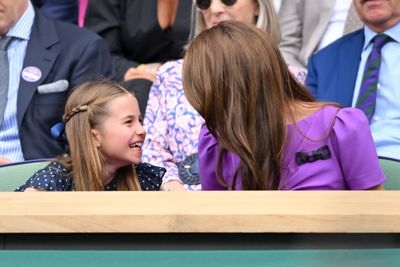
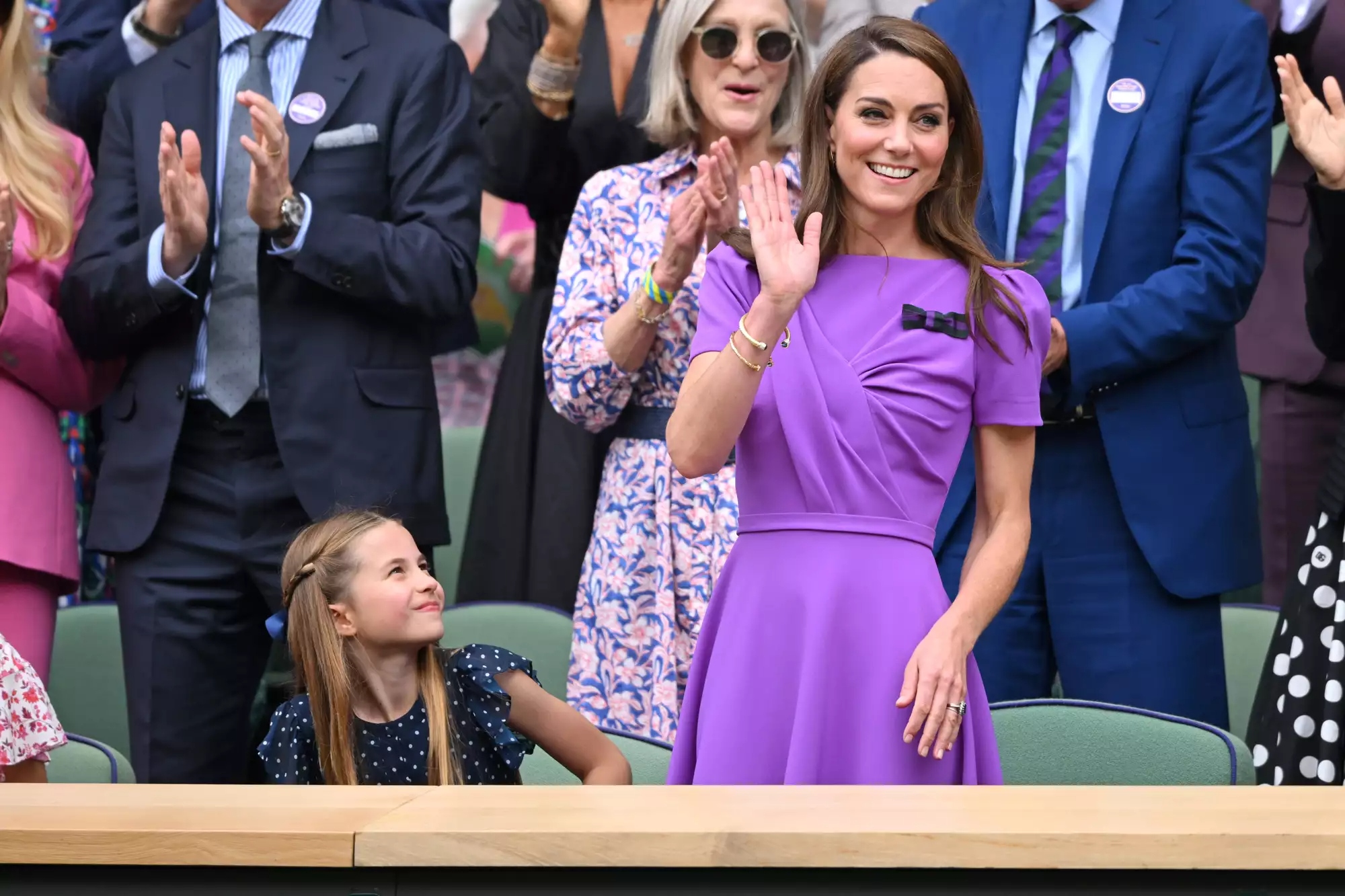
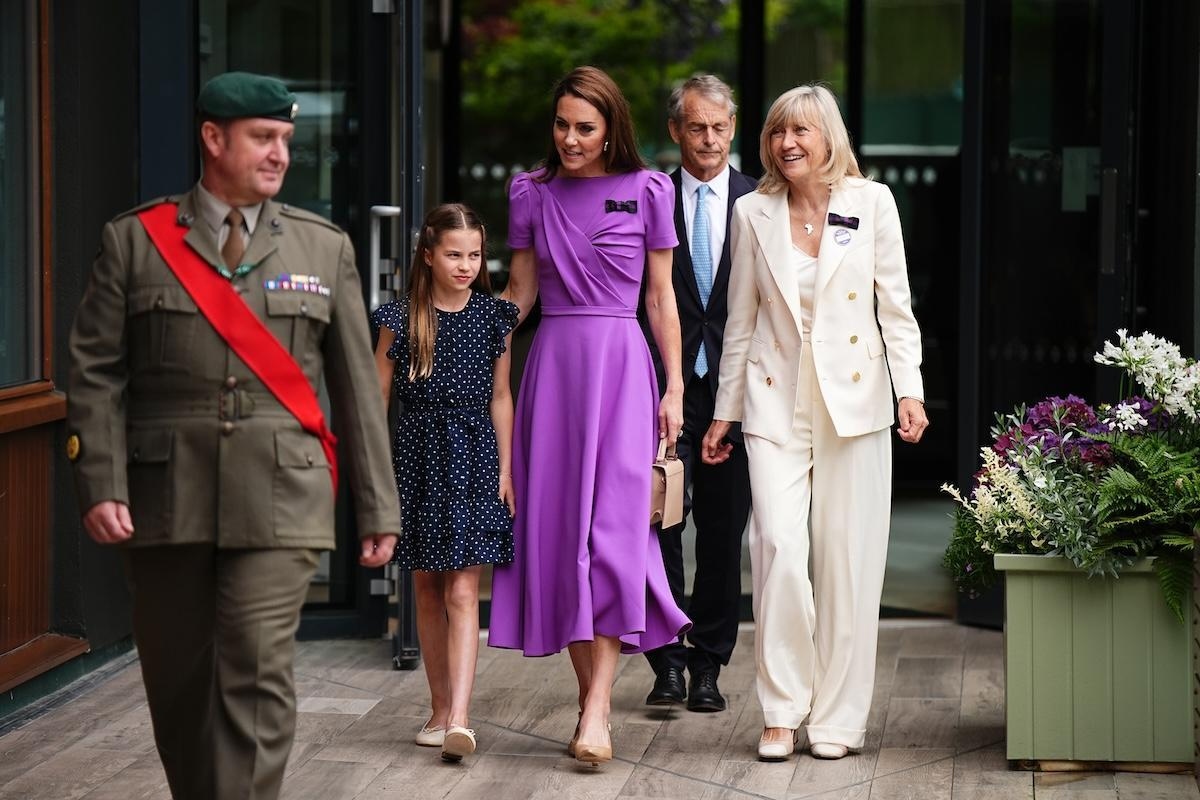
There are moments in royal life that arrive without announcement. No speech. No balcony wave. No carefully scripted message from the palace. And yet, they land with a weight that lingers far longer than any formal declaration. One such moment unfolded quietly at Wimbledon, beneath a summer sky, when Princess Catherine reached out to her daughter, Princess Charlotte, and reminded the world why these small gestures matter more than grand displays.

To many Americans watching from afar, Wimbledon is a tennis tournament—prestigious, historic, elegant. But when the Princess of Wales steps into the Royal Box, it becomes something more. It becomes a living stage where monarchy, motherhood, and memory converge. And this year, something unmistakable happened.
It wasn’t loud. It wasn’t dramatic. It was a hand, a lean, a shared glance. And suddenly, the internet stopped scrolling.
A Scene That Felt Strangely Familiar
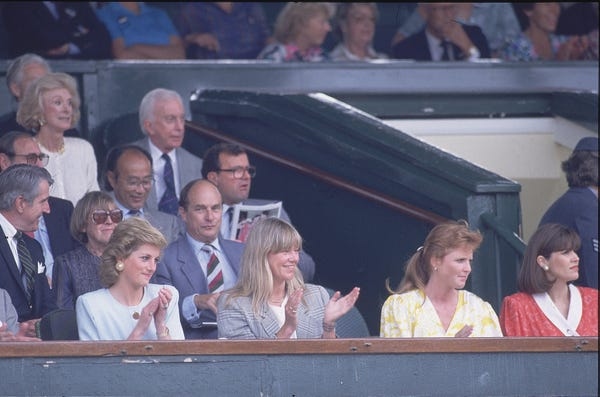
Those who remember Princess Diana remember her not just for her beauty or fashion, but for the way she touched her children in public. Diana didn’t fear tenderness. She didn’t hide affection behind protocol. At Wimbledon in the 1980s and 1990s, cameras often caught her leaning toward a young Prince William, whispering explanations, calming nerves, grounding him amid flashing lenses and roaring crowds.
Decades later, Catherine did the same with Charlotte.
The similarities were impossible to ignore. The posture. The timing. The instinct to protect without smothering. To guide without controlling. It felt less like imitation and more like inheritance—not of titles, but of emotional intelligence.
For American audiences, raised on images of stoic royalty, this moment cracked something open. It revealed a monarchy that understands the power of softness.
Catherine’s Quiet Authority
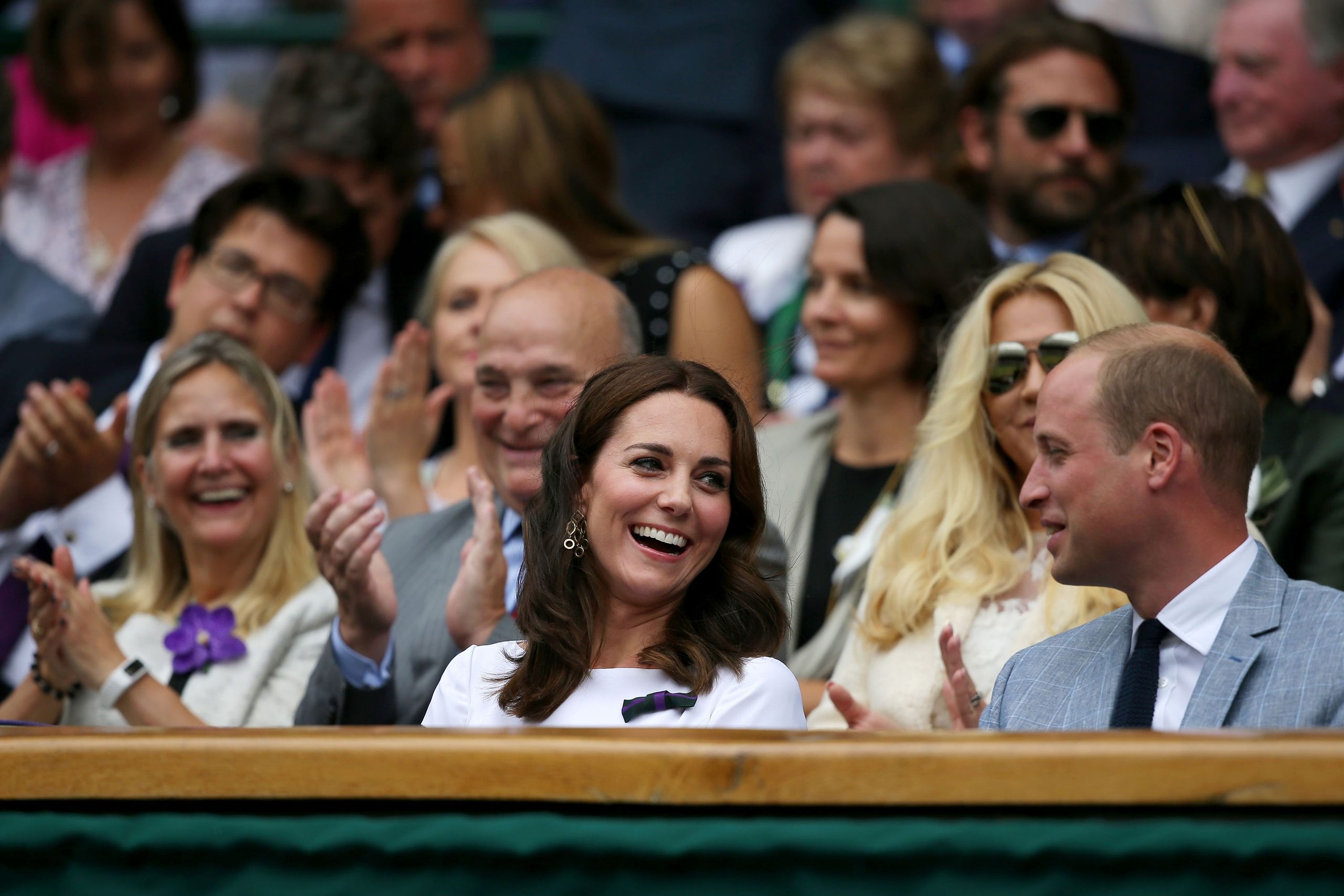
Princess Catherine has never ruled through force of personality. Her strength has always been quieter, steadier. Over the years, she has been criticized for being “too careful,” “too reserved,” “too perfect.” But moments like this reveal the truth: her restraint is intentional.
Catherine knows when to step forward—and when to let a moment breathe.
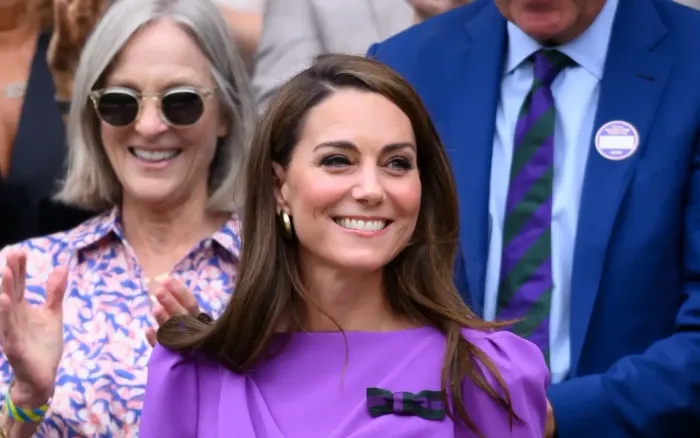
At Wimbledon, she didn’t command attention. She didn’t pose. She didn’t perform. She simply mothered. And in doing so, she demonstrated a form of leadership that resonates deeply with American values: emotional presence, consistency, and grace under pressure.
In a world addicted to spectacle, Catherine offered stillness. And the world leaned in.
Princess Charlotte: A Child Watching, Learning, Becoming
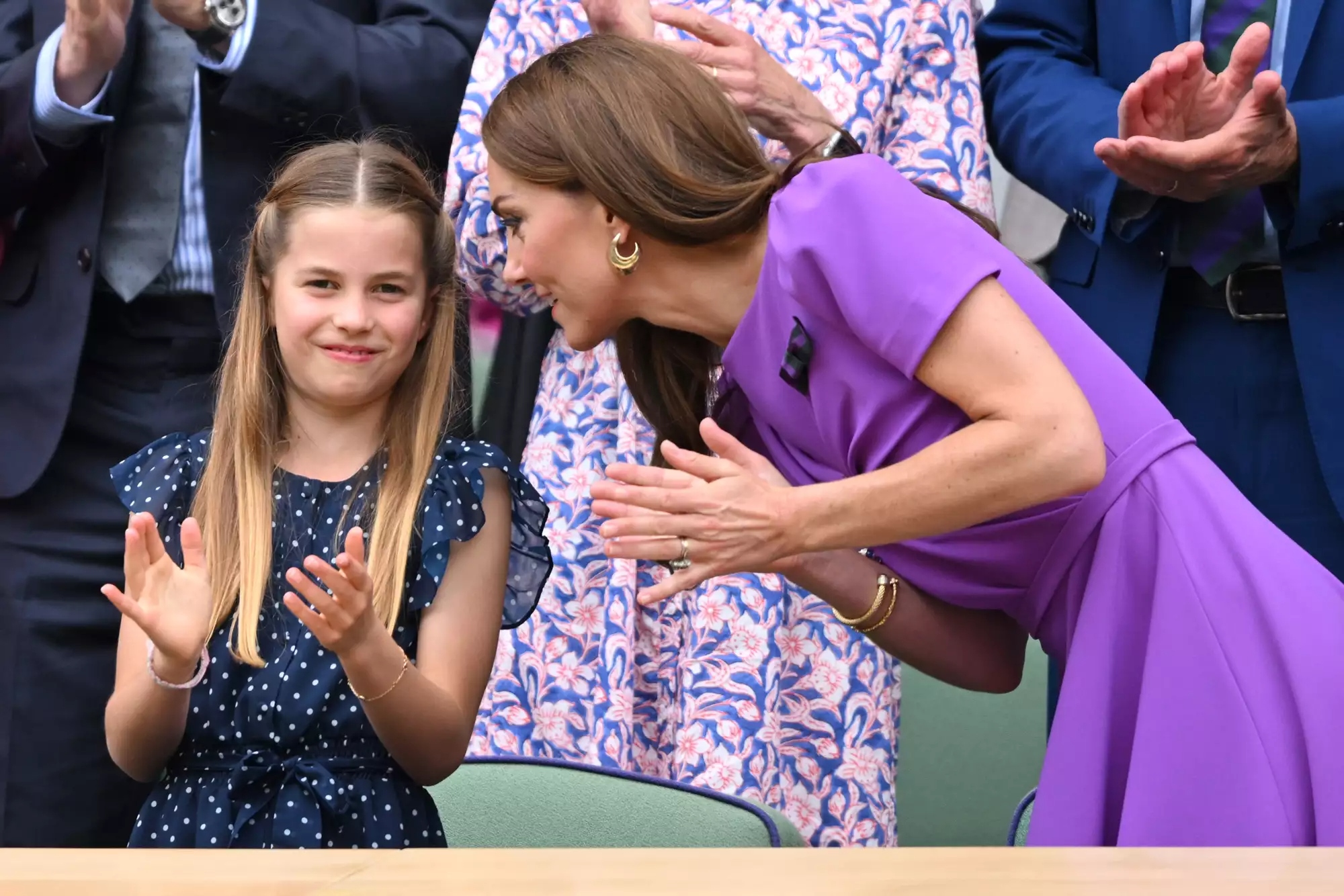
Princess Charlotte is not just any child. She is third in line to the British throne. Her future will be shaped by scrutiny, expectation, and symbolic weight. Every public appearance becomes a lesson—whether intended or not.
At Wimbledon, Charlotte appeared composed, observant, engaged. She didn’t fidget. She didn’t seek attention. She watched. She absorbed. And when Catherine leaned toward her, it wasn’t correction—it was connection.
For many American parents watching, this resonated deeply. It reflected a universal truth: children learn who they are by watching how they are treated. Not by lectures. Not by rules. But by presence.
Charlotte’s calm didn’t come from training. It came from trust.
Wimbledon as a Royal Classroom
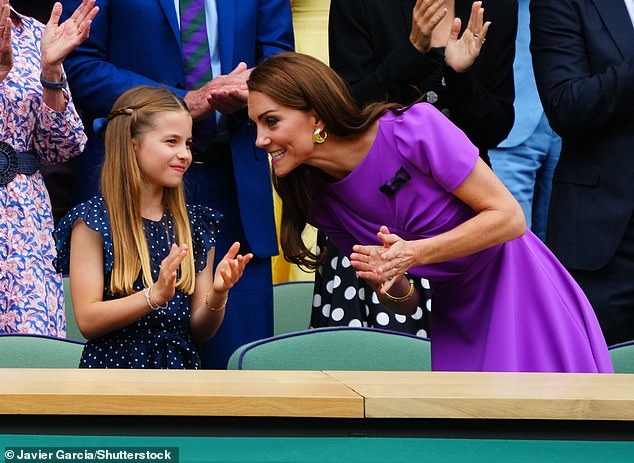
Wimbledon has always been more than sport for the British monarchy. It is tradition wrapped in strawberries and grass courts. It is continuity. Ritual. A reminder that some institutions endure not because they shout, but because they adapt.
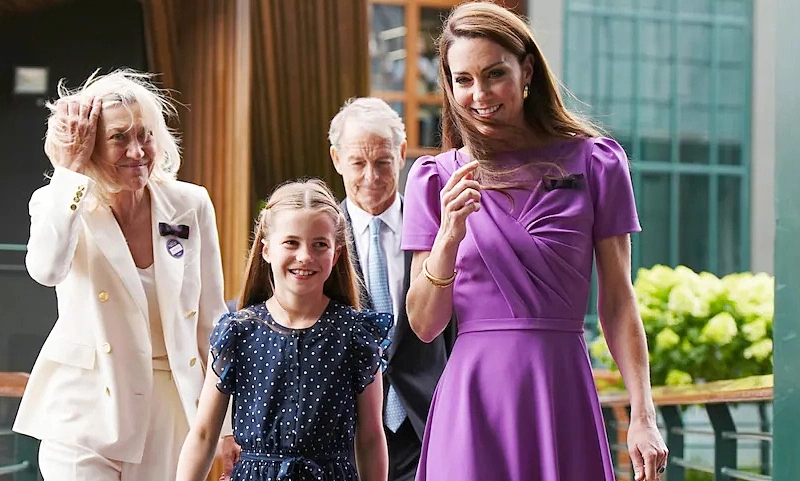
Catherine, as Patron of the All England Lawn Tennis Club, understands this symbolism better than anyone. Bringing Charlotte with her wasn’t accidental. It was experiential education.
Charlotte wasn’t shielded from the crowd—she was introduced to it. She wasn’t overwhelmed—she was supported within it. Catherine allowed her daughter to experience public life while ensuring she was never alone inside it.
That balance is rare. And it is learned.
The Diana Connection—Without the Tragedy
For Americans, Princess Diana remains a powerful emotional figure. Her vulnerability, her warmth, her humanity transcended borders. But her story also carries pain—of isolation, pressure, and loss.
What made this Wimbledon moment so profound was not just the resemblance to Diana—but the difference.
Where Diana often stood alone, Catherine stands supported. Where Diana struggled within the system, Catherine has learned how to work gently but firmly inside it. And now, she is passing that knowledge to Charlotte.
This is not history repeating. It is history healing.
Why Americans Felt It So Deeply
In the U.S., public figures are often admired for charisma, defiance, or disruption. But there is a growing hunger for something else: steadiness. Emotional safety. Leaders who don’t perform empathy—but live it.
Catherine’s gesture spoke that language fluently.
It reminded viewers of moments with their own parents. A hand on the shoulder at a crowded event. A whisper of reassurance before a big moment. A reminder that no matter where you are, you belong.
That universality is why the moment traveled so far, so fast.
A Future Queen in the Making—Without the Weight of Fear
Princess Charlotte may one day carry immense responsibility. But watching her with Catherine, it was clear she is being raised without fear.
There was no tension in her posture. No anxiety in her expression. Only curiosity and confidence.
This is how resilient leaders are shaped—not through pressure, but through secure attachment. Catherine is not preparing Charlotte to survive the crown. She is preparing her to live with it.
That distinction matters.
The Power of One Gentle Touch
In an era of viral outrage and performative emotion, one gentle touch at Wimbledon did more than trend. It reminded us that legacy is not built through noise.
It is built through moments no one plans—but everyone remembers.
Catherine didn’t speak. Charlotte didn’t pose. And yet, together, they told a story that crossed generations, oceans, and cultures.
A story about how strength can be quiet. How leadership can be maternal. And how the future, when nurtured carefully, doesn’t need to announce itself.
Sometimes, it simply rests a hand—and lets the world feel it.
And perhaps that’s why this moment won’t fade.
Because long after the match ended, the trophies were lifted, and the crowds dispersed, one image remained:
A mother.
A daughter.
And a legacy, finally at peace.
A Magical Windsor Christmas: Inside Catherine and William’s First Holiday Next Door to Their New Home — And Why Fans Are Calling It Their Most Heartfelt Celebration Ever
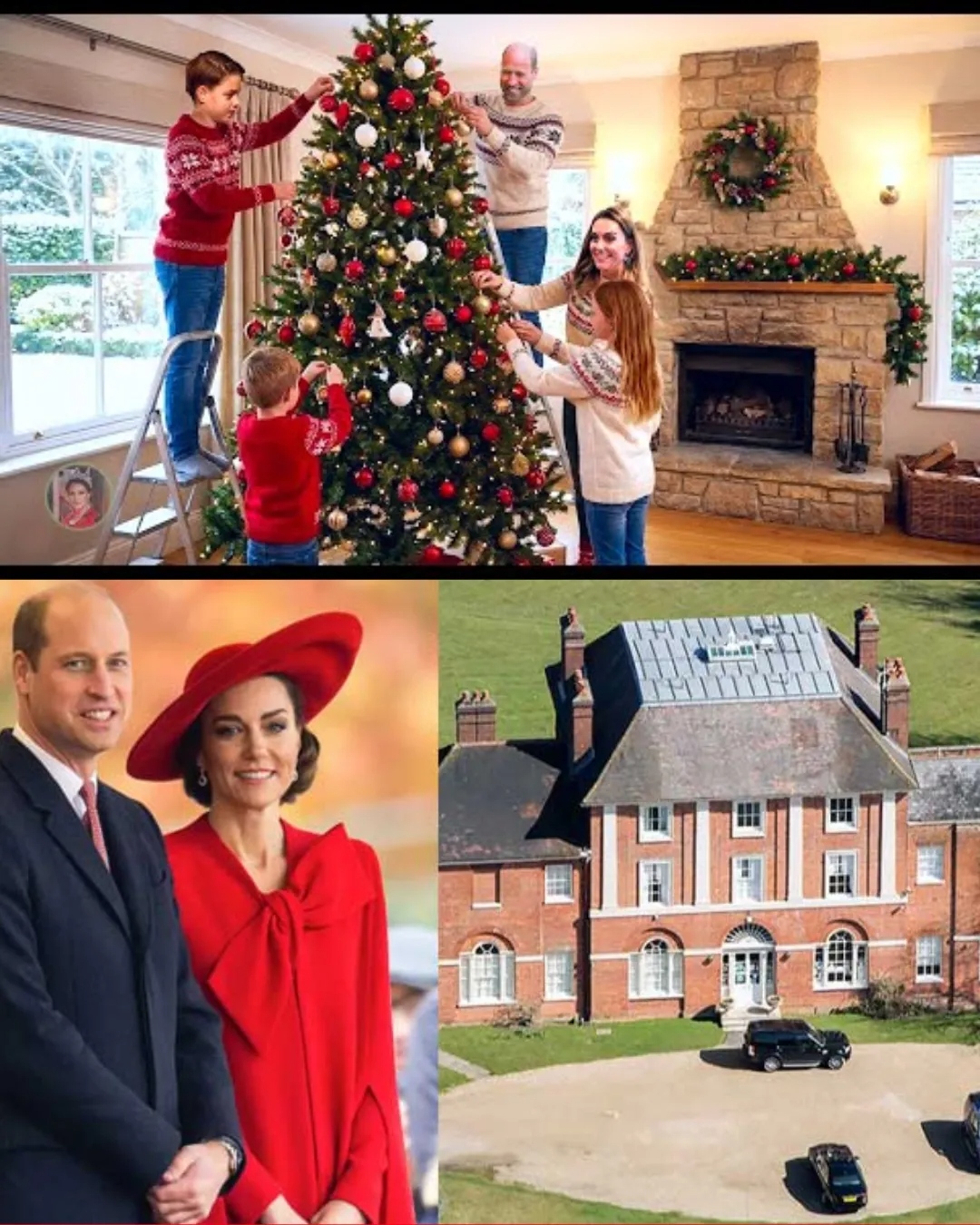
Christmas traditions have always held a special place in the heart of the British Royal Family, but this year, something felt different. Something quieter. Something warmer. Something more human.
This Christmas, for the very first time, Princess Catherine, Prince William, and their three children — George, Charlotte, and Louis — celebrated the holiday right next door to their new home in Windsor. It was a celebration that blended nostalgia, family warmth, and a kind of quiet magic that instantly captured global attention.

While the world watched the polished royal appearances at public engagements, what truly set social media on fire was what reportedly unfolded behind the glowing cottage windows that evening — a slice of royal life that felt so real, so relatable, that fans everywhere couldn’t stop talking about it.
Today, we’re stepping inside that “magical” Windsor evening — and exploring why millions believe this may have been the most emotional, meaningful Christmas for the Wales family yet.
