In the world of royalty, shock rarely arrives with noise. It comes in silence. In pauses between statements. In changes so subtle they feel almost accidental — until suddenly, everyone realizes the ground has shifted.

That is exactly how this moment has unfolded.
As whispers spread that King Charles has made an extraordinary, deeply symbolic gesture involving Princess Catherine’s parents, the reaction inside royal circles has been less disbelief and more stunned stillness. Because whether formal or informal, confirmed or quietly implied, gestures like this are never random. They are messages.
And for American audiences who have followed the monarchy through decades of evolution, upheaval, and reinvention, this story hits a familiar emotional note: the moment when tradition bends — not loudly, but deliberately — to make room for something new.
Why This Moment Feels So Different
For generations, the British monarchy drew an unmovable line between “royal” and “not royal.” Blood determined status. Birth dictated belonging. And outsiders — no matter how loyal — stayed outsiders.
That’s what makes the current conversation so arresting.
Carole and Michael Middleton have long occupied a unique place in royal history. They are not aristocrats. They are not titled. They are, by design,
ordinary. And yet, they raised a woman who would become the most trusted, stabilizing figure in the modern royal family.
So when talk emerged of King Charles extending a form of unprecedented recognition toward Catherine’s parents, the meaning went far beyond ceremony. It suggested a philosophical shift — one that resonates powerfully with American values of merit, character, and earned respect.
This isn’t about crowns.
It’s about acknowledgment.
The Middletons: The Family Who Never Sought the Spotlight
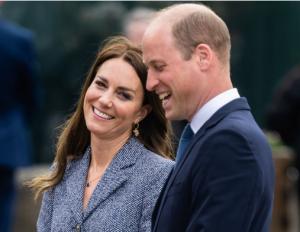
In the U.S., audiences often connect deeply with the Middleton story because it mirrors something profoundly American: upward mobility without entitlement.
Carole and Michael Middleton built their life quietly. They raised their children outside aristocratic privilege. They never pushed themselves forward after Catherine married Prince William. They didn’t chase relevance. They didn’t trade on proximity to power.
Instead, they did something far rarer in royal history.
They stayed normal.
That normalcy became Catherine’s greatest strength. Her steadiness. Her emotional intelligence. Her ability to move through royal life without drama or self-importance.
If King Charles truly sees value in that — and chooses to recognize the people who shaped it — the message is unmistakable.
The monarchy is no longer defined solely by lineage.
It is being reshaped by character.
King Charles and the Weight of Decision
King Charles is not an impulsive monarch. Every move he makes is filtered through history, symbolism, and consequence. Which is why even the
suggestion of this gesture matters.
Throughout his reign, Charles has shown a desire to slim down the monarchy, modernize its image, and restore public trust. He understands that survival in the 21st century depends less on pageantry and more on credibility.
And credibility, in this moment, has a face.
Princess Catherine.
She is consistently the most trusted royal in public opinion polls. She commands respect without demanding it. She reassures without speaking loudly. And crucially, she brings stability at a time when the institution desperately needs it.
Recognizing her parents — even symbolically — may be Charles’s way of reinforcing something he cannot say outright:
This is the future. And I support it.
Catherine’s Quiet Rise Toward the Throne
Americans have always responded to Catherine not because she dazzles, but because she endures.
Her rise has not been dramatic. It has been earned. Years of learning. Years of restraint. Years of waiting without complaint. And then, when pressure mounted — illness, absence, uncertainty — she handled it not with performance, but with dignity.
As Catherine prepares, slowly and deliberately, for her future role as Queen, every signal matters. And signals don’t always come in speeches. They come in who is included. Who is protected. Who is acknowledged.
If her parents are being drawn closer into the symbolic circle of the Crown, it suggests something profound: Catherine is no longer just adapting to the monarchy.
The monarchy is adapting to
her.
Why This Resonates So Strongly in America
For U.S. readers aged 45 to 65, this story strikes a deeply personal chord.
It speaks to family. To values passed down quietly. To parents who never expected recognition but shaped something extraordinary. To the belief that influence doesn’t always wear a title.
Americans understand that legacy is built at kitchen tables long before it’s displayed on balconies.
Catherine’s strength did not begin at Buckingham Palace.
It began at home.
And the idea that a King might recognize that — even symbolically — feels not just modern, but deeply human.
The Shadow of Diana — And the Difference
Princess Diana will always loom large in royal storytelling. But what’s striking is how different this moment feels.
Diana challenged the system emotionally and publicly.
Catherine is reshaping it quietly.
Where Diana’s family remained largely separate from royal structure, Catherine’s background seems increasingly integrated — not through drama, but through trust.
This isn’t about rewriting the past.
It’s about choosing a different future.
What This Could Signal for the Future Crown
Whether formal titles ever materialize or not almost becomes besid
e the point.
The real significance lies in what this moment represents.
It suggests a monarchy that values emotional grounding. That understands public trust is earned through authenticity. That sees the next Queen not as a symbol to be managed, but as a leader to be supported.
And it sends a subtle but powerful message: Catherine does not stand alone.
She stands on a foundation built long before royal life ever began.
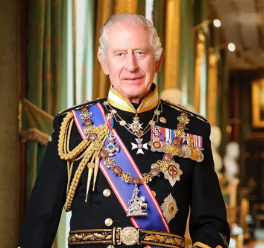
Why the Palace Silence Matters
The Palace has not rushed to clarify. And that silence is intentional.
In royal terms, silence is space — space for the public to absorb, interpret, and feel. Space for meaning to settle without being dictated.
Because sometimes the strongest statement is allowing people to recognize truth on their own.
As Catherine Steps Forward…
As Princess Catherine prepares for a future that feels closer than ever, the world is watching not just her, but the choices being made around her.
Who is acknowledged.
Who is valued.
Who is quietly brought closer.
And in that watching, many Americans see something hopeful.
A monarchy that understands its future depends not on tradition alone — but on the people who embody its best values.
If this moment proves anything, it’s this:
The Crown may be inherited.
But trust is earned.
And legacy begins long before the throne.
