Maranello is on fire, but the flames aren’t from a triumphant engine or a glorious victory; they are the consuming embers of an internal crisis.
Team Ferrari, an institution steeped in racing legend, is now officially teetering on the edge of its biggest organizational collapse in a decade.
The shockwave that sent tremors through the paddock wasn’t generated by a poor result on the track, but by an unfiltered outburst from a former F1 great: Juan Pablo Montoya.
The Colombian, known for his direct and often brutal honesty, did not mince words.
in a singular, devastating assessment, Montoya didn’t just critique a poor race strategy or a faulty aerodynamic update.
He exposed the long-hidden, systemic reason for Lewis Hamilton’s unsettling slump: the problem is not the seven-time world champion’s capacity to perform, but the very structure and culture of Ferrari itself.
This conclusion demolished weeks of Italian media narrative that had placed the blame squarely on Hamilton’s inability to adapt, revealing that his struggles were, in fact, merely reflections of Ferrari’s own profound organizational sickness.
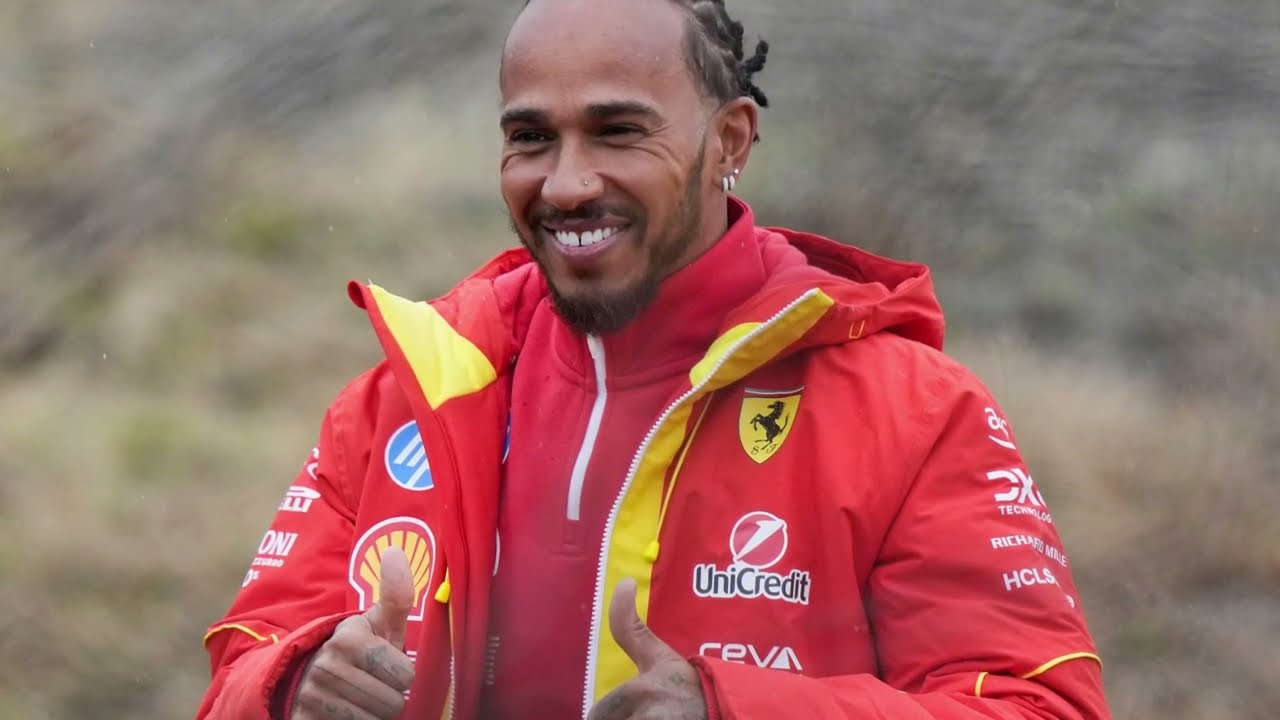
The Champion Caught in the Storm
Lewis Hamilton joined the Scuderia dreaming of a spectacular revival-the final, glorious chapter of his career, cementing his status as the last legend to lead the revered Red Team back to the top of the sport.
Yet, the reality he faces is a storm he could never have fully anticipated.
The visible signs of distress are now unmissable: small, restrained gestures, tense radio intonations, and expressions of increasing frustration from both Hamilton and his teammate, Charles Leclerc.
The team, by all accounts, is not operating in harmony.
Montoya’s argument is built on an undeniable truth about championship-winning drivers: even the most formidable talent requires an equally supportive, stable, and clear-headed structure to function at its peak.
For over a decade, Hamilton flourished at Mercedes because he was given a foundation of unparalleled team responsiveness, crystal-clear direction for car development, and a healthy work culture that valued and acted upon his input.
Ferrari, according to Montoya, simply isn’t ready to provide these fundamental aspects.
They lack the consistent stability required for a driver of Hamilton’s calibre to work efficiently and with confidence.
Without that rock-solid foundation, even a driver with 103 career wins will appear powerless.
This is why the narrative of Hamilton’s “slump” is entirely false; his apparent weaknesses are a direct, damning echo of Ferrari’s internal fragility.
The Structural Disease: Two Worlds at War
The root of this fragility, Montoya asserts, is an overlapping and often contradictory leadership structure at the highest levels.
This is a team divided, and the drivers are caught in the crossfire.
On one side stands Ferrari President John Elkarın, demanding immediate urgency, the cutting of obstacles, and instant results.
This philosophy, while ambitious, creates a state of perpetual high-pressure anxiety.
On the opposing side is Team Principal Fred Vasseur, who emphasizes stability, a long-term vision, patience, and consistent development.
While Vasseur’s approach is sound, the conflicting demands from above have created an environment where decisions at the top are no longer aligned.
The result is a car development program that constantly fluctuates without a clear, solid foundation.
Technical decisions, instead of being logical steps, often feel like new, desperate experiments that not all departments within the vast Maranello factory necessarily understand or support.
This internal tug-of-war is the chaos that permeates the entire organization, leading directly to the performance characteristics of the SF25.
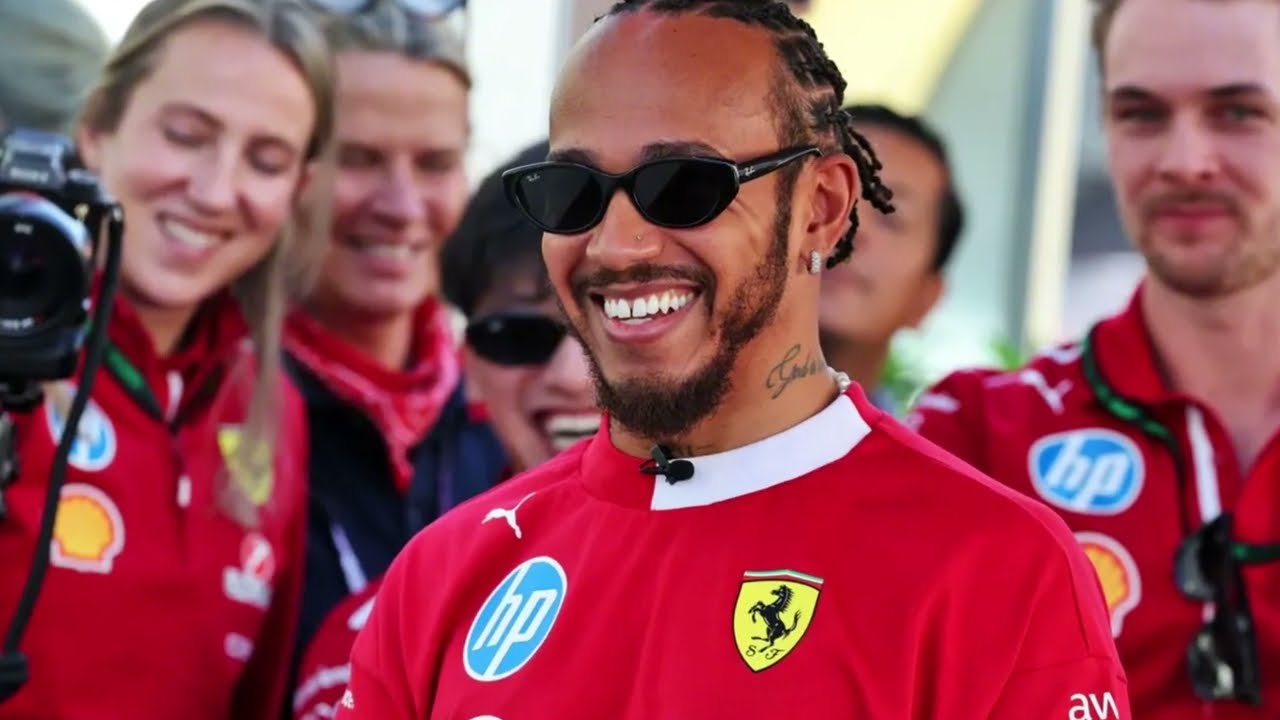
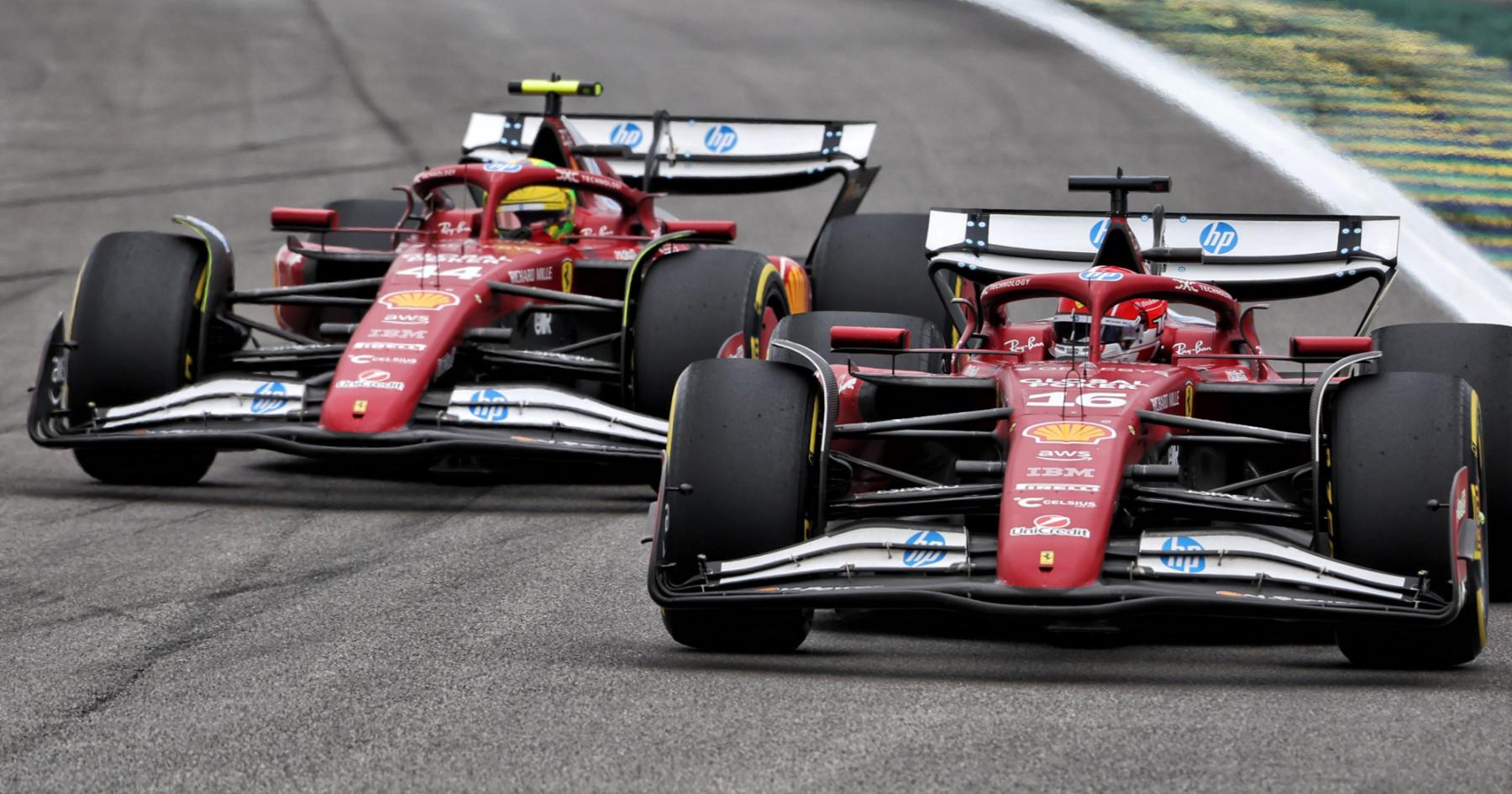
The SF25: A Car Designed for ‘Survival Mode’
Montoya’s description of the current Ferrari challenger is equally scathing.
He characterized the SF25 as a car that is “fast, but only when it happened to be performing well.”
This seemingly innocuous statement conceals a fatal flaw: its performance window is so incredibly narrow that the slightest change a shift in asphalt temperature, a small gust of wind, a fraction of an inch in setup-can drastically alter the car’s behaviour.
It goes from stable and competitive to erratic and unpredictable over the course of just a few corners.
This inconsistency forces the drivers to abandon a winning mindset.
Instead of driving to compete for the world championship, Hamilton and Leclerc are forced to drive “not to win but to survive.”
Montoya describes their approach as a continuous “survival mode,” a state utterly unsuitable for drivers battling for the highest honours in motor racing.
The car, a physical manifestation of the internal disarray, is a reflection of the team’s structural schizophrenia.
The Poisoned Culture: A Blueprint Interpreted as a Threat
Perhaps the most damning evidence of Ferrari’s internal struggle lies in its debilitating work culture, which Montoya describes as viewing criticism not as a means of correction, but as an existential threat.
A shocking detail revealed by the analysis is Lewis Hamilton’s attempt to bring his winning culture to Maranello.
He provided Ferrari engineers with a detailed development document containing comprehensive technical analysis based on his decade-plus of successfully leading a world championship team.
This was meant to be a winning blueprint, a free guide to institutional success.
Yet, in a monumental failure of leadership and self-reflection, this document was interpreted by some within the team not as leadership, but as “personal criticism” or a “threat.”
This defensive reception-where world-class, proven expertise is seen as an attack rather than an asset is the recipe for complete communication breakdown and the ultimate root of the crisis.
The message is clear: Ferrari’s internal system rejects the very mechanisms required to make it a winning team.
The Strategic Error: Asking a Champion to Stay Silent
The culmination of this organizational mess was John Elkann’s controversial public mandate: “The drivers should talk less.”
At a moment when the team desperately needed openness, transparency, and unity to address its myriad issues, Ferran’s president chose to close the doors to communication.
For Montoya, this was not just a poor decision, it was the biggest strategic error of the season.
Lewis Hamilton, the sport’s most successful communicator and feedback-giver, wins through dialogue and collaboration.
Asking him to stay silent, Montoya argued, was akin to forcing him to relinquish his “most potent weapon.”
The boss of Mercedes, Toto Wolff, once Ferrari’s biggest rival, offered the coldest, most accurate external comment on this move.
Wolff noted that Ferrari is living in two disconnected worlds: “one of ambition and chasing titles and one of internal friction that hinders all processes.”
He echoed the condemnation of the “talk less” mandate: “When leaders demand silence, it’s a sign that they have lost their way.
Championships are won through transparency, not fear.”
In his trademark elegant response to the mounting pressure, Hamilton refused to submit, declaring. “I’ve got my team back, I’ve got myself back, I will not give up.”
Montoya views this not as stubbornness, but as proof that the champion is still in control of his own mindset, even as his team falters and loses its sense of direction.
Two Paths for the Future of Maranello
Montoya’s explosive analysis distills the crisis into a simple, painful truth: Ferrari doesn’t have a driver problem at all..
The chaos, the inconsistency, and the frustration stem entirely from shaky foundations, an unclear and defensive work culture, and a lack of consistent, singular direction.
As long as the team fails to make fundamental improvements to its internal culture, the cycle of chaos will continue, the car development will remain inconsistent, and strategic decisions will continue to overlap and confuse.
Ultimately, no matter how talented, the drivers will lose confidence, feeling like they are fighting alone against a stifling, self-defeating system.
Montoya outlines two starkly contrasting futures for Lewis Hamilton at Ferrari. In the first, the team remains unchanged.
The entrenched defensive culture poisons the atmosphere, Hamilton is misunderstood, and he operates in an environment that stunts his potential.
In the second scenario, however, everything changes.
If Ferrari finally opens its eyes and realizes it has recruited not just a driver but an institution-a standard of winning culture the course of history could dramatically shift.
Hamilton could become formidable again, Ferrari could build true weapon-grade cars, and the rigid internal culture could evolve into a modern, progressive, and, most importantly, winning mentality.
The ultimate question remains a challenge to the soul of the Scuderia.
Can the most romantic, historic team in Formula 1 overcome its own organizational fragility, choose transparency over fear, and embrace the winning blueprint handed to them by a seven-time world champion?
Or will they allow the internal poison to consume their ambition, solidifying their status as a perpetual championship contender crippled by the forces within?
The clock is ticking, and the world is watching to see if Maranello will finally face the truth exposed so brutally by Juan Pablo Montoya.
