Leclerc’s struggles began early, defined by a distinct lack of confidence in the challenging conditions.
Ferrari’s 2025 machine has repeatedly underperformed in wet or low-grip scenarios.
The season opener in Australia saw the team finish a miserable eighth and tenth, and Leclerc himself suffered a crash on his lap to the grid during the Miami GP Sprint, followed by a season-low 14th-place finish at Silverstone.
The pattern is clear, a car that is already disappointing in the dry becomes nearly undrivable when stability is compromised.
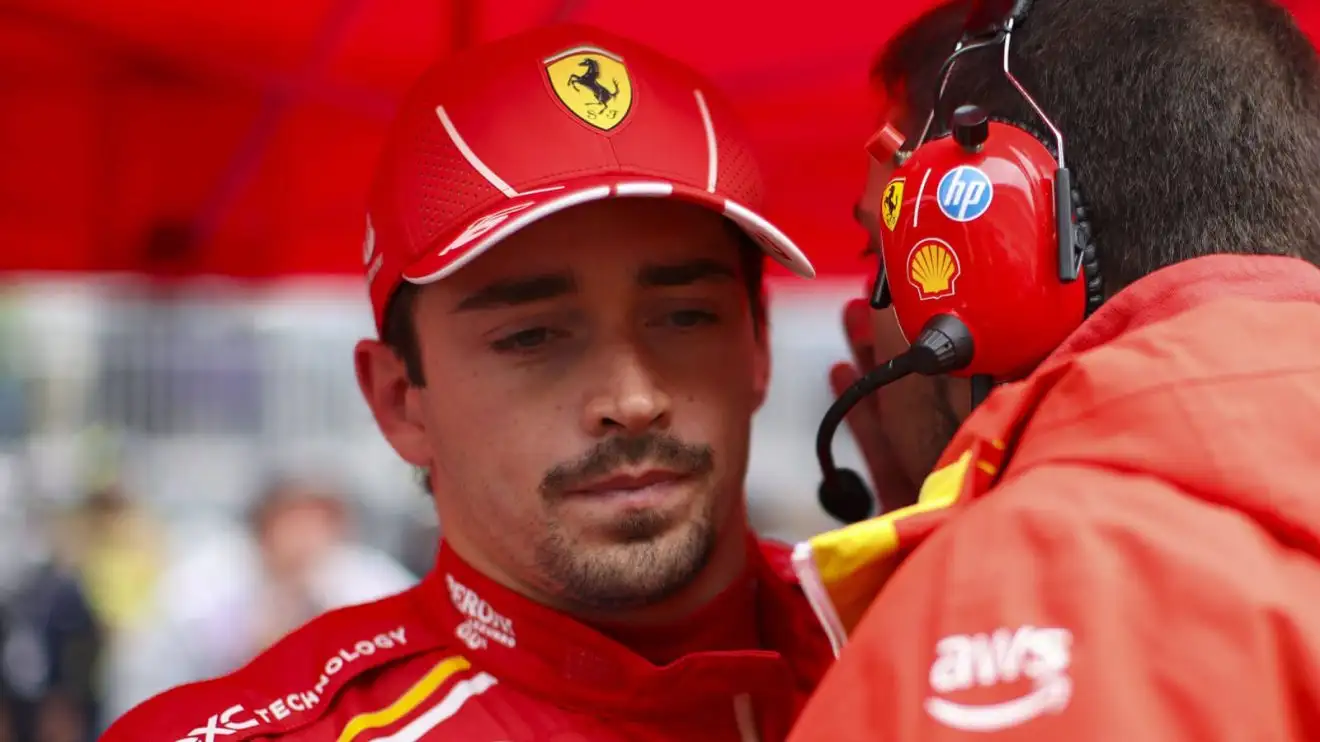
During the critical Q3 session, Leclerc could not contain his frustration, telling his race engineer Bryan Bozzi that he had “no idea where the pace has gone.”
The real outburst, however, followed the conclusion of the session, delivered with raw, unfiltered emotion that is sure to draw further scrutiny from the team hierarchy.
“Oh my god, embarrassing, f embarrassing!” Leclerc fumed over the team radio.
“I don’t get how we can be so off the pace… there is like zero grip, zero f-grip.”
This explicit condemnation a direct assault on the car’s fundamental handling characteristics-may not sit well within the Maranello walls.
Reports have previously surfaced that Leclerc’s highly explicit outbursts have upset some members of the team.
While his anger is clearly rooted in competitive frustration, such public and vivid criticism of the machinery risks exacerbating internal tensions at a time when the team desperately needs unity.
Hamilton’s Humiliation Operational Errors Compound Pressure
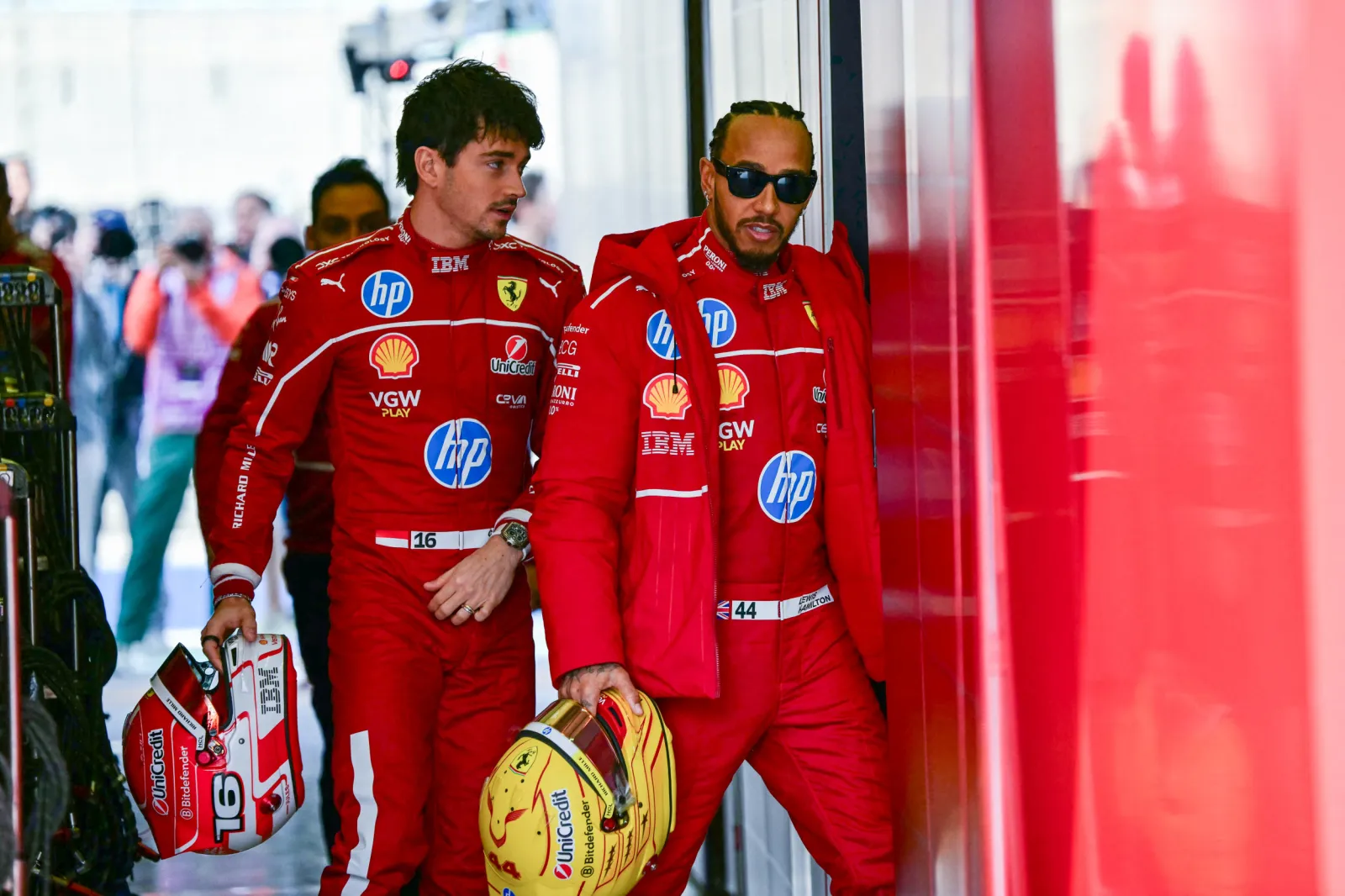
If Leclerc’s session was frustrating, Lewis Hamilton’s was a complete disaster.
Qualifying last on the grid is an ignominious distinction for any driver, but for a seven-time World Champion, and his first season driving for the iconic Italian team, it marks a devastating new low.
Hamilton became the first Ferrari driver to qualify last since Giancarlo Fisichella at the 2009 Abu Dhabi Grand Prix, a statistic that underscores the severity of the operational errors plaguing his garage.
Hamilton’s failure to escape the drop zone in the earlier stages was ultimately due to a miscommunication-or, as some analysts termed it, “confusion”-with the pit wall.
The veteran driver needed one final flying lap to secure his position, but due to mixed messaging, he backed off the throttle, believing he had crossed the line too late to make another attempt.
However, his race engineer, Riccardo Adami, had already instructed him to keep pushing.
This operational misstep-a breakdown in the crucial communication chain between driver and garage-is becoming a concerning pattern on Hamilton’s side of the Ferrari pit wall.
The impact of these consistent struggles is significant.
Hamilton has now failed to reach Q3 in seven out of 22 races this season, a shocking figure compared to Leclerc, who has only missed the final qualifying session once.
The cumulative effect of poor car performance, operational blunders, and the relentless pressure of adapting to a new team appears to be taking its toll.
Analysts have noted that Hamilton has appeared “overwhelmed” by the sheer demands of his transition to Ferrari, which may be a contributing factor to his uncharacteristic mistakes and the compounding cycle of failures.
The Las Vegas Grand Prix was supposed to be a chance for a renewed sense of optimism, a late-season opportunity to capitalize on the unique track conditions and the low-grip environment.
Instead, it delivered another gut punch, cementing the notion that Ferrari is struggling not just with raw pace, but with consistency, stability, and the high-pressure execution required for success at the elite level of Formula 1.
The contrasting struggles-Leclerc battling a car he openly calls “embarrassing” and Hamilton battling his own team’s operational confusion-highlight a deep-seated vulnerability that Maranello must address if they hope to return to the front of the grid in future seasons.
